Animal Rescue Video Generator
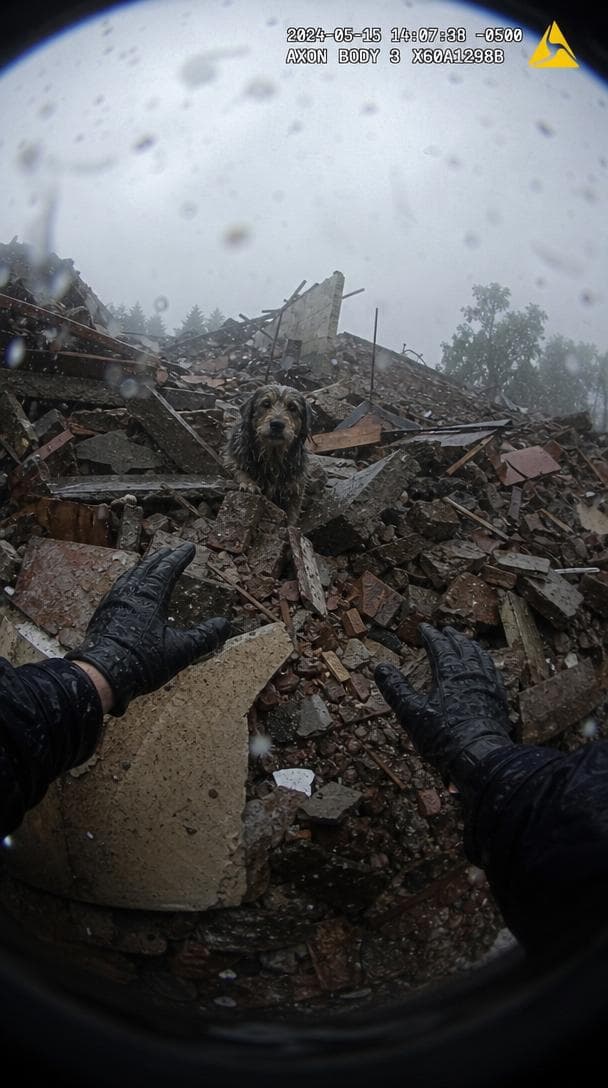
Body-camera footage from the chest of a rescuer. Gloved hands enter from the bottom of the frame, clear debris, reach in, and lift a frightened animal out.
You name the animal and where it is stranded. The point of view, the hands, the weather on the lens and the whole shape of the rescue are the format.
Which animal, and where is it stranded?
Name the animal and the situation it's found in. The bodycam POV, the gloved hands and the rescue itself are handled for you. Extra scenes are extra rescues.
- A soaked terrier trapped in storm rubble
- A kitten stuck in a flooded storm drain
- A muddy puppy on a snowy roadside
- A frightened fox tangled in a fence
- A stranded foal in a flooded field
How it works
You type one line. The format supplies everything else: the camera, the framing, the pacing, the lighting and the sound design are already written and are restated for every scene, which is what keeps a multi-scene video looking like one video.
You choose how many scenes and how long each one runs, from one to ten scenes of five to ten seconds. The length of the video is that multiplication, and so is the price. The default here is 1 scene of 8 seconds.
The cheapest version of this format is 175 credits. Animated video is 35 credits per second of finished video in HD, 25 at Standard quality and 65 at Full HD. Plans start at $19 a month for 3,000 credits.
Why this format works
The first-person view puts the viewer in the rescue rather than watching one. You never see the rescuer, only what they see, which is why the format holds attention far better than a third-person version of the same event.
Every scene is a complete rescue with a resolution, so there is no unfinished tension. That is unusual for short-form, and it is what makes these watchable in a row.
The animals are always dirty and frightened but visibly unharmed. Nothing distressing is shown, which keeps the format safe to run at scale.
Picking a subject that renders well
- Name the animal and the hazard together. A kitten stuck in a flooded storm drain gives the format everything it needs.
- Weather and mess help. Rain, mud, snow and rubble all read as real bodycam conditions.
- One scene is one complete rescue. Extra scenes are additional rescues with different animals, not a longer version of the same one.
- Keep the situation plausible. Storm damage, drains, fences, roadsides and flooded fields all work. Anything exotic starts to look staged.
Frequently asked questions
Do I see the rescuer?
Never. Only black-gloved hands and sleeved forearms entering from the bottom edge. A face or a reverse angle would break the bodycam illusion the format depends on, so the brief rules them out.
Are the animals shown injured?
No. Every animal is dirty, soaked and frightened but visibly unharmed. No blood, no wounds and nothing distressing to look at.
What happens if I ask for more than one scene?
Each scene becomes a different animal in a different situation, with the same rescuer and the same bodycam look. The scenes do not continue one another, because a single rescue split across two clips would leave the first one unresolved.
What does one scene cost?
A single five-second scene is 175 credits in HD. The default for this template is one scene, since one rescue is a complete video.